Production Commenced — What It Means
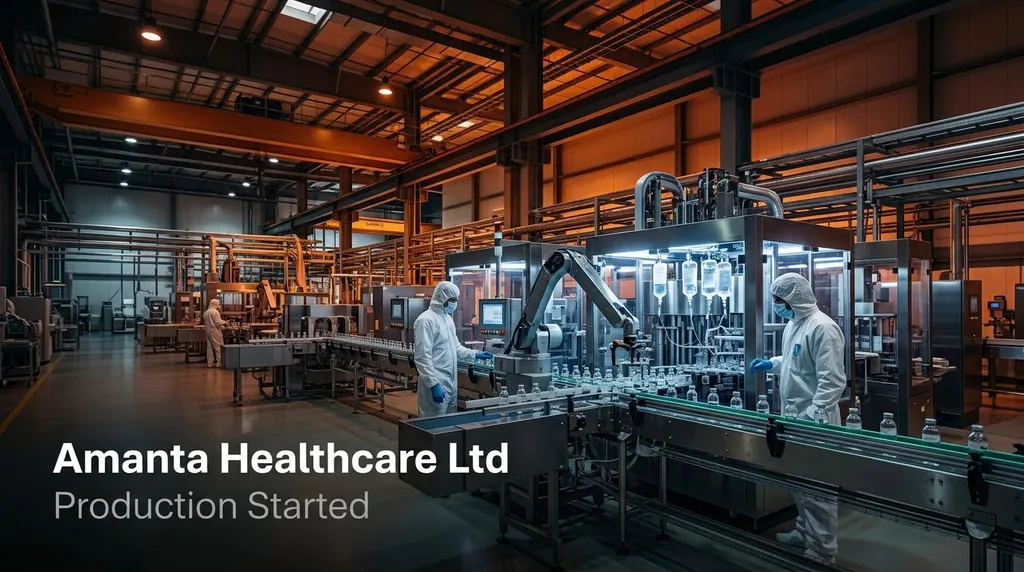
Amanta Healthcare has officially operationalized its 10.8 MWp solar power plant located at Village Baroda, Taluka Matar, in the Kheda district of Gujarat. This facility, which began generating units on May 30, 2026, is dedicated entirely to captive consumption. By transitioning to renewable energy, the company aims to secure its power supply while significantly mitigating the volatility of external energy pricing.
This scale of solar integration is particularly relevant for pharmaceutical manufacturing, where consistent and cost-effective power is a critical component of the production cycle and overall operational efficiency.
Financial Context
Amanta Healthcare currently maintains a market capitalization of 487.35 crore, with annual operating revenue standing at 287.68 crore. The company has demonstrated a robust net profit growth of 41.66 percent on an annual basis, supported by an operating profit margin of 19.42 percent in the most recent quarter. The stock Price to Earnings ratio of 32.76 sits comfortably below the industry average of 40.48, suggesting a competitive valuation relative to peers.
With a Piotroski Score of 5, the firm exhibits stable financial health as it integrates this new infrastructure to optimize its cost base.
Strategic Revenue Impact
The commissioning of the 10.8 MWp solar plant is strategically designed to reduce long-term operational costs rather than directly generating external revenue. By offsetting high-tariff grid electricity with self-generated green energy, Amanta Healthcare expects to enhance its operating margins over time. In a sector where energy costs often represent a sizable portion of manufacturing overheads, this move provides a sustainable hedge against rising utility expenses.
The transition to captive power generation is expected to positively influence the bottom line by lowering the total cost of production for its specialized pharmaceutical portfolio.
Sector Tailwinds
The Indian pharmaceutical industry is increasingly prioritizing environmental, social, and governance goals, with a specific focus on energy transition. Large-scale solar adoption allows manufacturers to meet stringent international sustainability standards required for global supply chain participation. Furthermore, with the sector facing margin pressures from fluctuating raw material costs, energy self-sufficiency has become a key competitive advantage.
Government incentives for renewable energy and the push for Green Pharma are encouraging companies like Amanta to invest in captive power solutions to ensure long-term viability and significantly lower their carbon footprints.