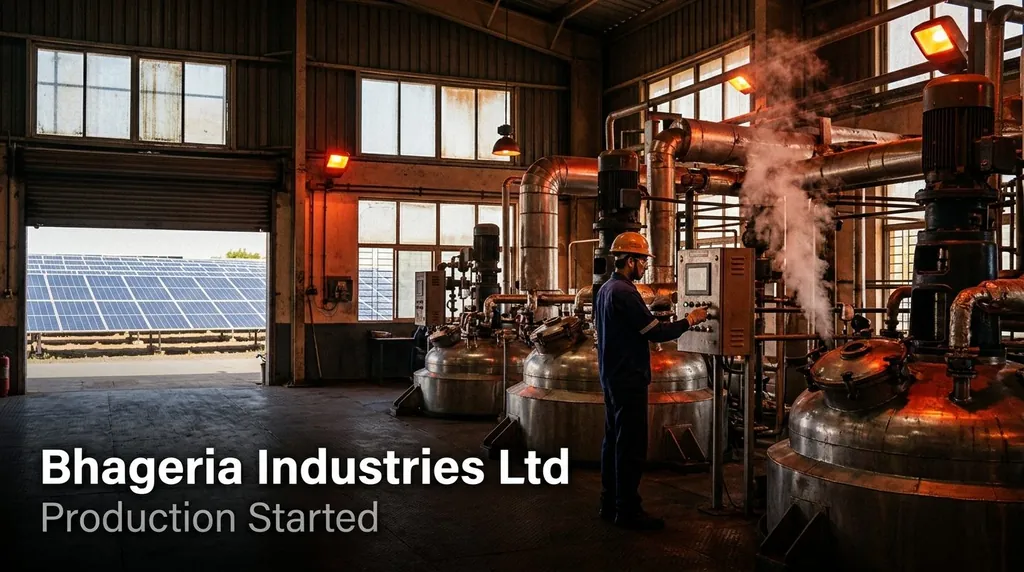
Production Commenced — What It Means
Bhageria Industries, through its wholly-owned subsidiary Rahuri Cleantech Private Limited, has successfully operationalized a 7 MW solar photovoltaic power plant in Khanapur, Maharashtra. The facility comprises two distinct segments, Bay-I and Bay-II, each contributing 3.5 MW to the total capacity. This commissioning, finalized on May 25, 2026, marks a significant step in the company's energy transition strategy.
The plant is now grid-connected and fully functional, designed to supply clean energy under the regulatory framework of the Mukhyamantri Saur Krushi Vahini Yojana (MSKVY) 2.0, an initiative aimed at solarizing agricultural feeders in the state.
Revenue Impact and Strategic Scale
- Project commissioning strengthens the company’s recurring revenue stream through long-term power supply contracts
- Enhances the renewable energy portfolio, supporting environmental, social, and governance (ESG) targets
- The 32 MW aggregate target under MSKVY 2.0 provides a clear roadmap for further capacity expansion
- Diversification into solar energy helps mitigate cyclicality risks associated with the core chemical segment
- Grid-connected operations ensure immediate contribution to the subsidiary's operational cash flows
Business Overview
Primarily recognized as a leading player in the Dyes and Pigments industry, Bhageria Industries has established a strong presence in the Chemicals and Petrochemicals sector. The company reports an annual operating revenue of ₹873.96 crore, reflecting a robust YoY growth of over 46%. While its core operations focus on chemical manufacturing for global markets, Bhageria has strategically pivoted towards renewable energy to diversify its earnings base.
This shift is supported by high promoter confidence, with a stable holding of 71.77%, and a healthy durability score of 65, indicating strong financial management amidst industrial shifts.
Sector Tailwinds
The Indian renewable energy sector is witnessing significant momentum, driven by state-specific schemes like Maharashtra’s MSKVY 2.0. This framework encourages private participation in decentralized solar projects, providing stable regulatory environments for industrial players. As the chemicals industry faces volatile raw material costs and global demand shifts, integrating green energy assets allows companies like Bhageria to benefit from lower long-term energy costs and government incentives.
With a Price to Earnings ratio of 14.63, Bhageria’s strategic expansion into higher-margin green infrastructure aligns with broader national goals of achieving net-zero emissions and sustainable industrial growth.