What Is the Fund Raise?
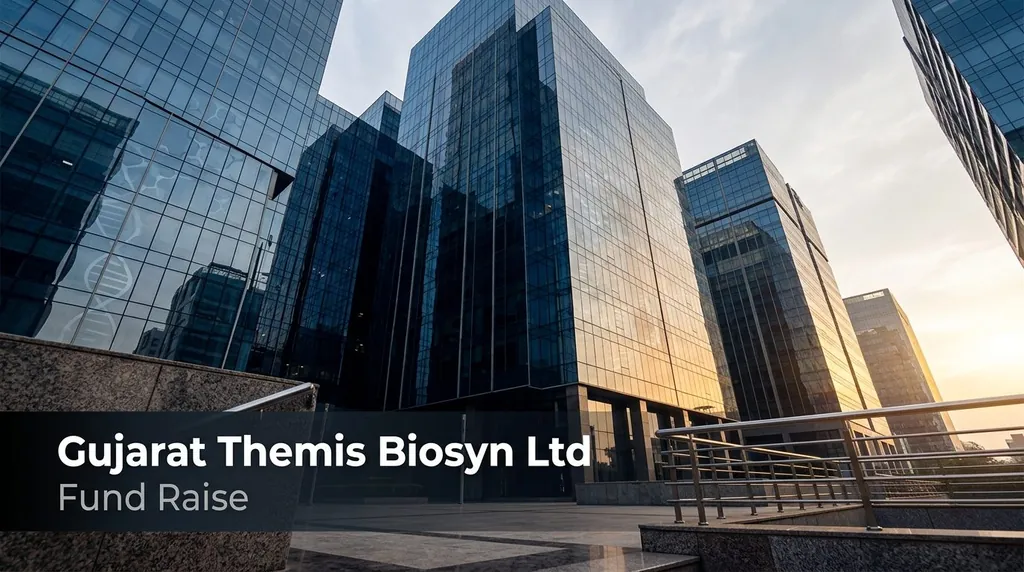
The fund-raising program consists of a dual mechanism involving a Qualified Institutions Placement and a preferential allotment. The board has sanctioned a ceiling of ₹1,000 crore for the QIP, which can be executed through equity shares or other convertible securities in one or more tranches. Concurrently, the preferential issue will target non-promoter entities.
While the QIP upper limit is defined, the specific pricing and volume for the preferential issue will be determined by the Fund Raising Committee of the Board in alignment with SEBI's institutional capital and disclosure requirement regulations.
Strategic Rationale
- Strengthens the balance sheet to facilitate upcoming capital expenditures in pharmaceutical manufacturing.
- Broadens the institutional investor base through participation of qualified domestic and foreign funds.
- Provides necessary liquidity to support research and development initiatives for fermentation-based products.
- Enhances competitive positioning within the specialized active pharmaceutical ingredient segment.
Business Overview
Gujarat Themis Biosyn is a specialized player in the pharmaceutical sector, focusing primarily on biotechnology and fermentation processes. The company is a key producer of Rifampicin and related intermediates, operating a significant manufacturing facility in Vapi, Gujarat. Backed by joint venture partners Themis Medicare and Yuhan Corporation of South Korea, it serves critical needs in the anti-tuberculosis and antibiotic therapy segments.
The company's technical expertise in fermentation technology differentiates it in a market where such production capabilities are highly specialized and capital-intensive.
Financial Context
With a trailing twelve-month revenue of ₹165.82 crore and a net profit of ₹46.68 crore, the company demonstrates high profitability with an operating margin of 43.77%. The current market capitalization stands at ₹4,502.45 crore. The stock trades at a price-to-earnings ratio of 96.45, which is substantially higher than the industry average of 39.6, reflecting its status as an expensive performer in the market.
Promoter holding remains stable at 70.86%, providing a solid foundation for this capital infusion without significant dilution of the promoter stake.
Industry Context
- Rising demand for localized fermentation capacity to reduce dependence on imported pharmaceutical intermediates.
- Supportive government policy landscape through PLI schemes for critical active pharmaceutical ingredients.
- Increased focus on biopharmaceuticals and high-margin specialty chemicals within the domestic sector.
- Growth in the global antibiotic market driving volume requirements for specialized intermediate manufacturers.