Project Details and Scope
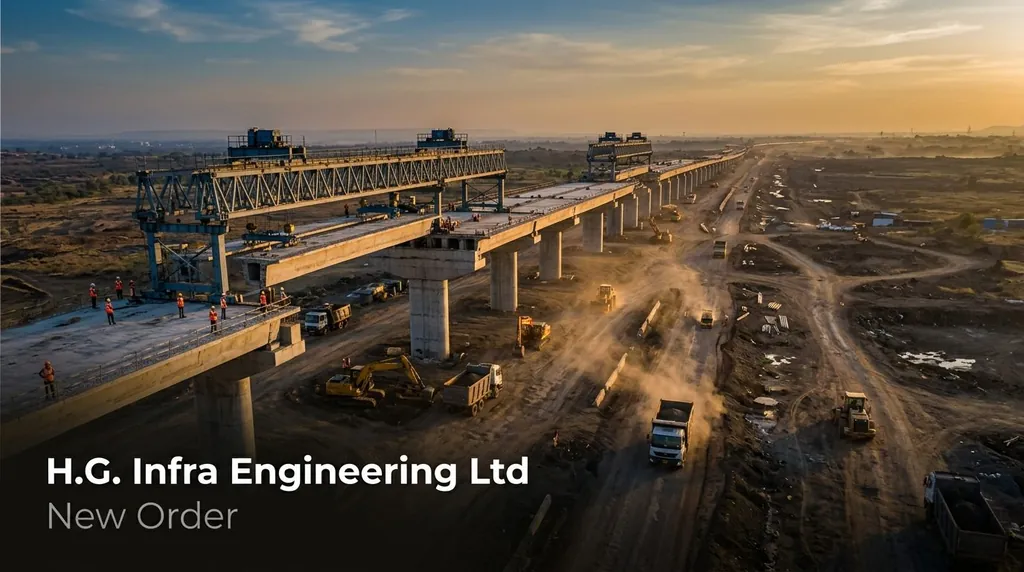
The project encompasses the construction of a 6-lane highway corridor, featuring partially elevated structures, along the Pune to Shirur section of NH-753F. The work spans from Km. 10+600 to Km.
64+000, representing a minimum design length of 53.40 kilometers in the state of Maharashtra. This development includes the improvement of existing road infrastructure and will be executed under an item rate contract. The stipulated construction period for this massive infrastructure undertaking is 36 months, highlighting the scale and engineering complexity of the corridor.
Business Impact and Pipeline
Securing this ₹3,931.11 crore order significantly bolsters H.G. Infra's order book, providing long-term revenue visibility for the next three years. This contract from Welspun Enterprises Limited demonstrates the company's ability to win large-scale sub-contracts from major infrastructure developers beyond direct government tenders.
The project reinforces H.G. Infra's technical footprint in the Maharashtra region, particularly in the high-growth corridor of the Pune-Shirur section, which is critical for industrial connectivity and regional logistics.
Financial Context and Market Position
- The company reported an operating revenue of ₹5,168.76 crore on a TTM basis with a net profit of ₹392.25 crore
- Quarterly revenue for the period ending December 2025 showed a YoY growth of 12.36 percent
- Current market valuation reflects a TTM price-to-earnings ratio of 10.46 compared to the industry average of 31.82
- Promoter holding remains stable at 71.78 percent as of the latest filing period
- The stock has delivered a month-to-date return of 15.57 percent despite a volatile yearly performance
Industry Landscape and Competitive Dynamics
The Indian construction and engineering sector is witnessing a surge in large-scale road projects as the government focuses on national highway expansion. H.G. Infra Engineering operates in a competitive environment characterized by increasing input costs and stringent execution timelines.
Despite these challenges, the company maintains a durable position in the EPC segment, specializing in highways, bridges, and flyovers. The shift toward partially elevated corridors reflects a broader industry trend toward minimizing land acquisition hurdles while maximizing traffic throughput in congested semi-urban regions.