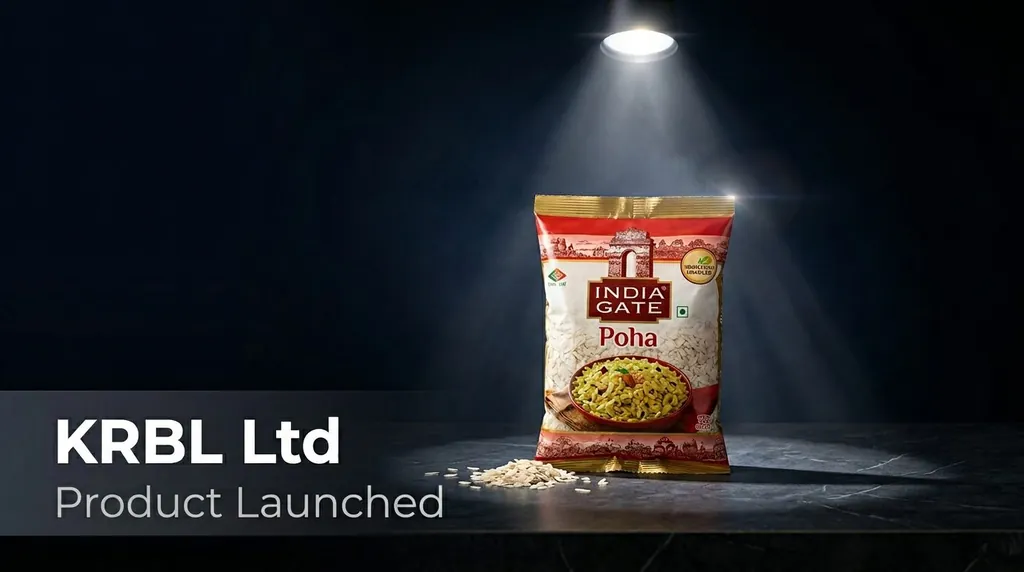
The Product — What It Is
India Gate Poha is introduced as a Thick Poha variant, specifically targeting the domestic Indian market. Sourced from the rice fields of South Gujarat, the product is positioned as a premium kitchen staple featuring whole flakes that require only a single wash before cooking. The packaging emphasizes health benefits, including high fibre content and a light, fluffy texture.
This launch represents the first product in KRBL’s new portfolio of everyday kitchen staples, moving beyond its traditional dominance in the premium Basmati rice segment to address broader household consumption needs.
Commercial Opportunity
- Branded poha is a high-growth sub-segment within the Indian breakfast and snacks market.
- Consumers are increasingly shifting from unorganized loose staples to packaged, hygienic brands.
- Distribution will leverage KRBL's existing pan-India network of retail outlets and modern trade.
- Competitive differentiation is achieved through the India Gate brand trust and specific sourcing from South Gujarat.
- The product caters to the rising demand for convenient, healthy, and traditional breakfast options.
Strategic Fit
The launch aligns with KRBL’s long-term strategy to evolve from a specialized rice miller into a diversified FMCG food company. By utilizing the flagship India Gate brand, which already commands significant market share in the Basmati category, the company aims to reduce its dependence on the cyclical and export-sensitive rice trade. This diversification into staples allows KRBL to capture a larger portion of the Indian consumer's monthly grocery basket.
The expansion into South Gujarat's sourcing regions also indicates a broadening of the company's supply chain capabilities beyond the traditional Basmati-growing belts of North India.
Financial Context
Financially, KRBL maintains a robust profile with a trailing twelve-month revenue of ₹6,097.86 crore and a net profit of ₹648.04 crore. The company operates with a high durability score of 85 and a Piotroski Score of 8, indicating strong fundamental health. While the stock currently trades at a PE of 12.19, which is lower than the sector average of 31.18, the entry into higher-frequency staples could potentially impact volume growth.
Current technical indicators show a Relative Strength Index of 49.2, placing the stock in a neutral zone as it expands its domestic footprint.