Project Scope and Execution
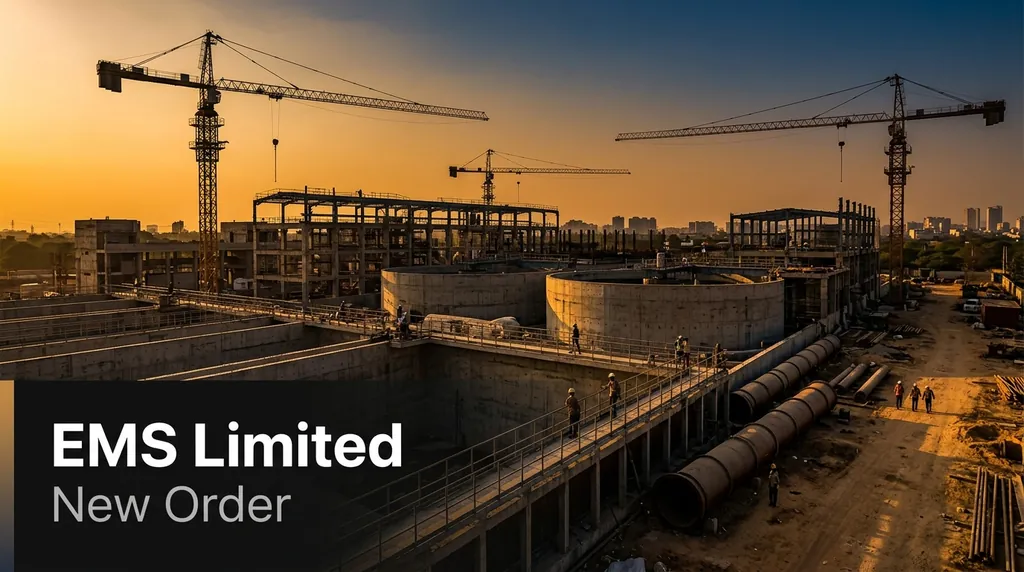
The contract entails the provision, laying, and jointing of internal and peripheral sewer lines in Tikri Kalan GOC. This infrastructure development is designed to function under the command of a proposed Sewage Treatment Plant (STP) at the same location. EMS Limited successfully transitioned from its lowest bidder (L1) status, announced earlier in July 2026, to receiving the formal Letter of Intent.
The company is required to execute the entire scope of work within a 15-month timeline, emphasizing the project's role in Delhi's immediate urban sanitation upgrades.
Strategic Importance of Delhi Jal Board
- Delhi Jal Board is the primary agency responsible for water supply and sewage disposal in the National Capital Territory
- Securing government contracts from major municipal bodies provides high revenue visibility and credit reliability
- Successful execution of such large-scale urban projects strengthens the company's eligibility for future smart city tenders
- The project aligns with state-level initiatives to modernize sanitation infrastructure in peripheral residential pockets
Financial and Market Context
EMS Limited currently operates with a market capitalization of ₹2,129.88 crore and a trailing twelve-month (TTM) revenue of ₹732.21 crore. The new order of ₹158.29 crore represents a significant addition to the company's order book, particularly as recent quarterly financials showed a contraction in net profit and revenue. The stock is currently trading at a price-to-earnings (PE) ratio of 23.53, which is lower than the industry average of 25.89.
This contract win comes at a time when the company's momentum score sits at 49.53, indicating a neutral technical trend.
Waste Management Sector Dynamics
The Indian waste management and utilities sector is seeing increased capital expenditure from both central and state governments. EMS Limited, operating in this specialized infrastructure niche, faces competitive dynamics where domestic entities often lead local municipal tenders. While the company's annual net profit growth has seen a downward trend recently, the consistent inflow of urban sewerage projects highlights the ongoing demand for environmental engineering services.
Rising urbanization and stricter environmental compliance norms for sewage treatment remain primary tailwinds for the sector.