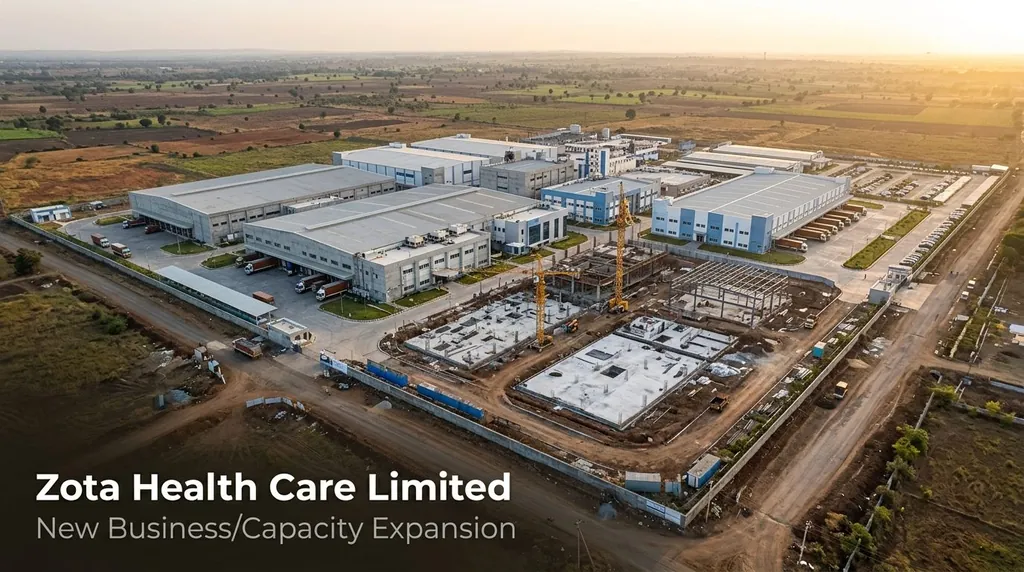
What Is the Expansion?
Zota Health Care’s retail arm, Davaindia, underwent a rapid scaling phase in the quarter ending June 30, 2026. The company added 201 Company Owned Company Operated stores and 63 Franchise Owned Franchise Operated stores to its network. While 18 stores were closed during this period due to relocation or operational adjustments, the net addition remains substantial.
The corporate-run stores are strategically managed through Davaindia Health Mart Limited, a wholly owned subsidiary, ensuring direct oversight of service quality and inventory management across 1,855 corporate-run locations as of the quarter's end.
Strategic Rationale
This expansion aligns with the company's objective to capture a larger share of the generic medicine market in India. By rapidly increasing the density of Davaindia outlets, the company improves brand visibility and accessibility for price-sensitive consumers. The heavy tilt toward corporate-owned openings—comprising over 76 percent of new additions this quarter—indicates a shift toward a more controlled retail environment.
This strategy allows for better implementation of standardized patient care protocols and integrated supply chain efficiencies, which are critical for maintaining the low-cost structure required for high-volume pharmaceutical retail.
Business Model
- Revenue is primarily generated through the sale of generic medicines and wellness products across a vast retail network
- The COCO model utilizes a subsidiary-managed structure to capture full retail margins and maintain brand consistency
- The FOFO model leverages franchise capital for rapid geographical expansion while earning through supply margins
- Direct distribution to nearly 3,000 stores reduces dependency on external pharmaceutical wholesalers
- Vertically integrated manufacturing supports the retail chain with a portfolio of over 2,500 products
Financial Context
Zota Health Care currently operates with a market capitalization of approximately ₹4,812.2 crore and has seen a one-year price appreciation of over 45 percent. Despite a reported TTM net loss of ₹73.94 crore, the company has maintained strong top-line momentum, with quarterly revenue rising 67.75 percent year-on-year to ₹163.18 crore. The significant capital commitment involved in opening 264 stores in a single quarter reflects an aggressive growth-oriented phase.
The stock is currently classified as an Expensive Performer with an RSI of 69.14, trading near its 200-day moving average.
Industry Outlook
The Indian generic pharmacy retail sector is witnessing a transformation driven by organized chains offering high-quality medicines at affordable prices. With the government’s push for generic medicine adoption and increasing consumer awareness, organized players are well-positioned for scale. Competitive intensity remains high with the entry of large conglomerates and e-pharmacy players.
However, the physical store model provides a distinct advantage in the chronic medication segment, where immediate availability and pharmacist interaction are preferred by a large demographic of the Indian population seeking cost-effective healthcare solutions.