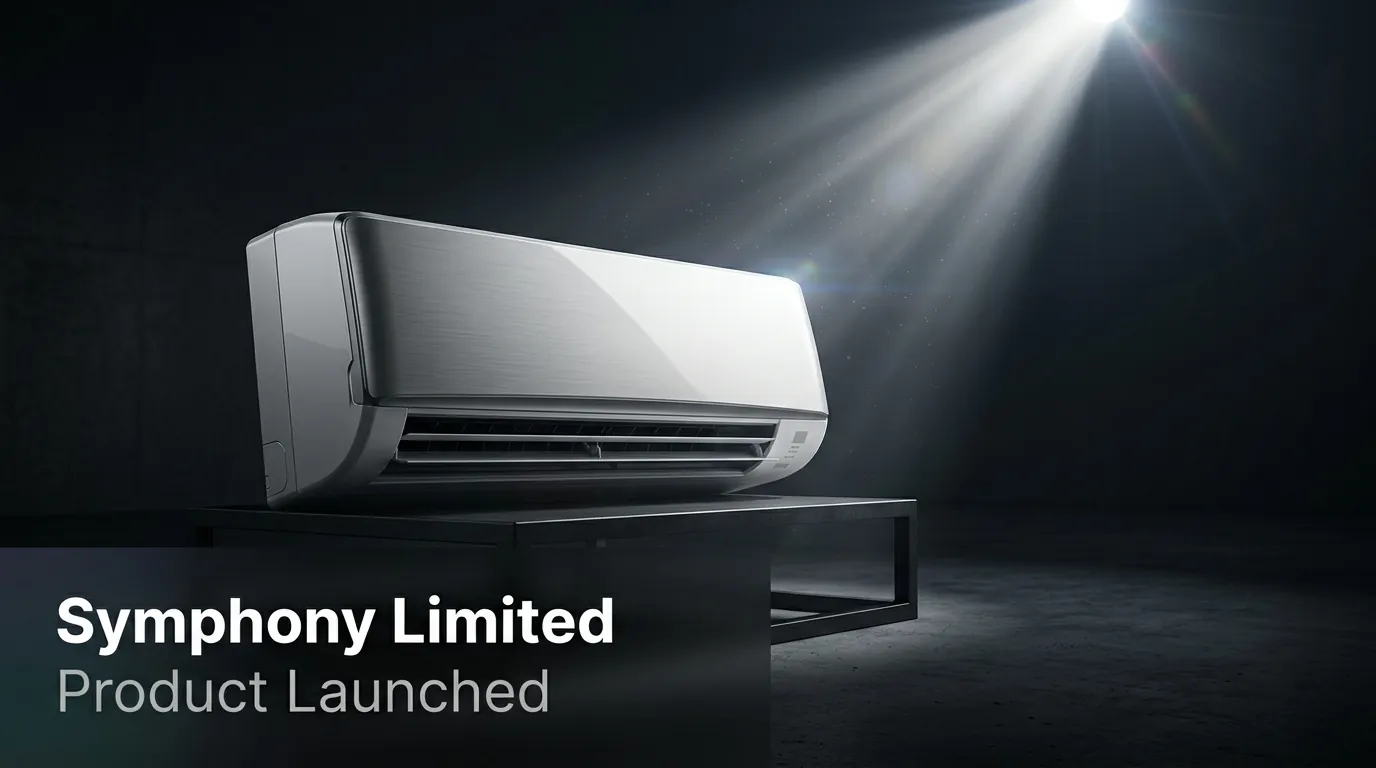
The Product — Phased Entry and Strategy
Symphony’s expansion targets three key electrical segments: Room Air Conditioners, Brushless Direct Current (BLDC) Ceiling Fans, and Air Purifiers. This entry is designed as a calibrated rollout beginning in the December 2026 quarter. By introducing these categories, the company aims to move beyond its core evaporative cooling identity into broader climate control solutions.
The products will be introduced selectively across specific ranges and distribution channels to gauge consumer response before scaling. This move marks a return to a multi-product strategy, a departure from its two-decade focus solely on the air cooler segment.
Commercial Opportunity and Market Dynamics
- The Indian Room Air Conditioner market is estimated at USD 8.59 billion for 2026
- Urban household penetration for air conditioners remains low at approximately 10-15%
- Mandatory energy-rating norms are driving a rapid industry transition toward BLDC motor technology
- High-efficiency 5-star BLDC fans consume up to 50% less electricity than standard induction models
- Seasonal air quality deterioration in major metros is accelerating demand for portable air purifiers
Strategic Alignment
This diversification aligns with Symphony’s Beyond India Summer Products (BISP) portfolio, which seeks to reduce the impact of seasonal business cycles. By entering the AC and fan segments, Symphony leverages its existing brand equity in cooling and its established distribution network of thousands of dealers across India. The asset-light approach allows the company to maintain high capital efficiency by avoiding immediate investments in heavy manufacturing infrastructure.
Instead, the company will deploy internal accruals towards R&D, product development, and brand-building, maintaining its traditional focus on innovation while outsourcing production to original equipment manufacturers.
Management Outlook
The pace and scale of expansion will be calibrated to consumer response, execution readiness and satisfactory commercial and operating outcomes.